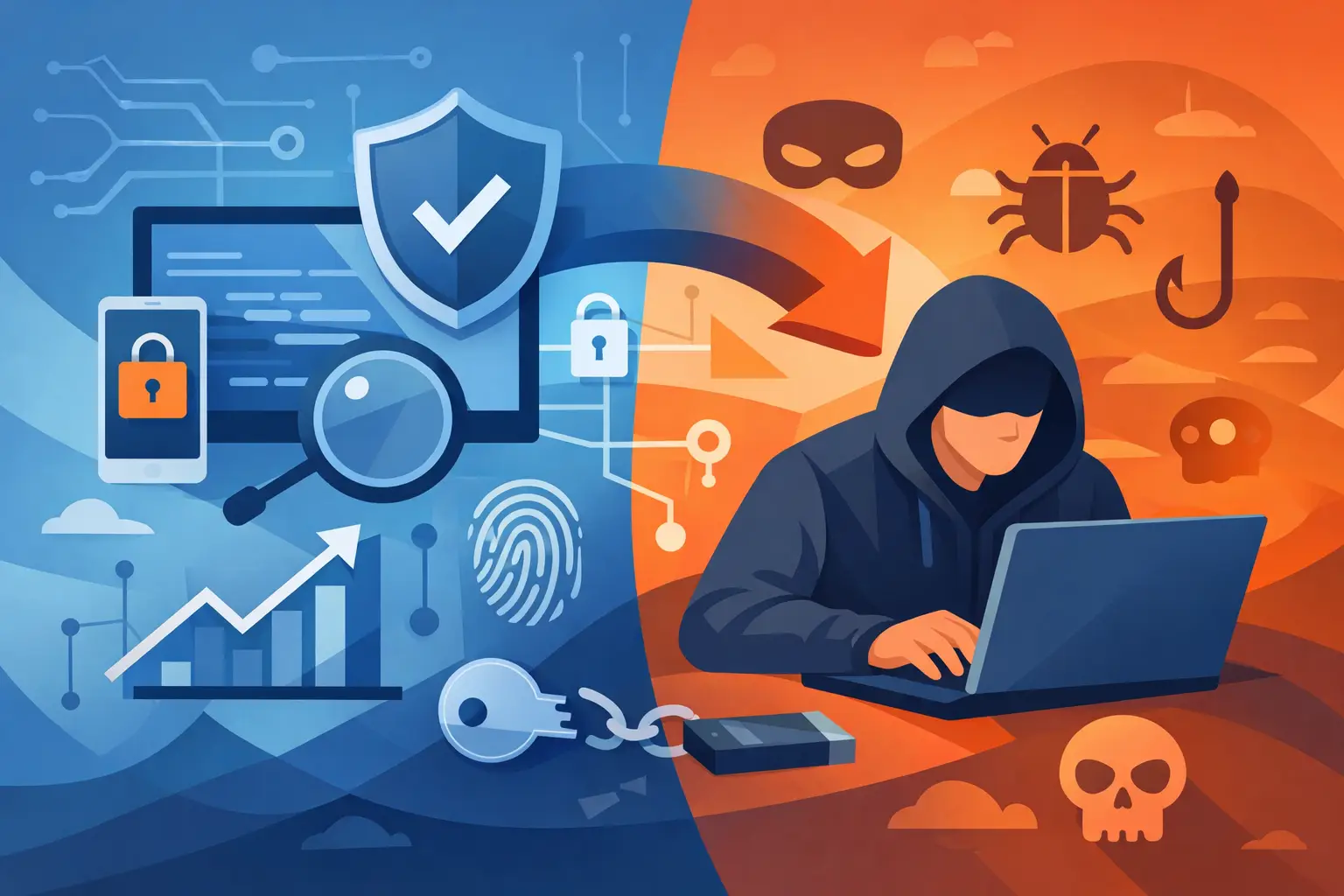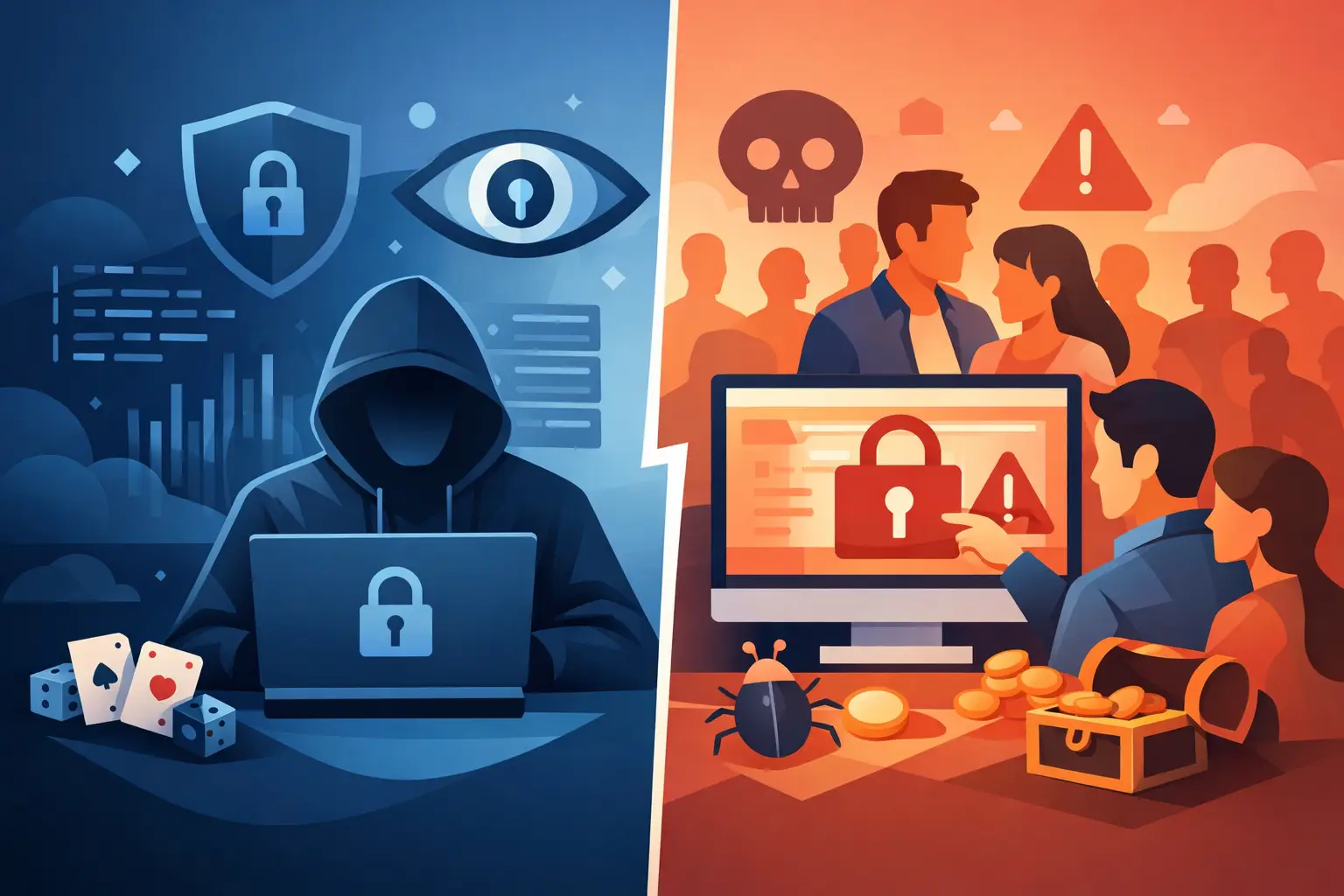
A menu marked private can look like the safer choice: paid access, a closed Discord, limited stock, and claims of constant updates. In the private cheats vs public debate, that presentation is exactly what makes people lower their guard. It should not. Any tool that changes an online game, bypasses its rules, or interferes with other players can put your account, hardware, payment details, and reputation at risk.
The short version is simple. Public tools are often easier to find and easier to abuse. Private tools may be less visible, but they are not automatically safe, legal, or undetectable. The label tells you how a tool is distributed. It does not prove what it does on your PC or how a game publisher will respond.
Private Cheats vs Public: What the Labels Actually Mean
Public cheats are distributed widely, often through open forums, file-sharing sites, video descriptions, or free download pages. They usually spread fast after a game update, and they can disappear just as quickly. The code may be copied, repackaged, modified, or bundled with unwanted software by anyone in the chain.
Private cheats are restricted by payment, invitation, a customer portal, or a smaller user base. Sellers commonly frame that limited access as a security advantage. In practical terms, private access can mean fewer people are using the same tool at the same time. It does not mean the developer is trustworthy, the software is clean, or the tool cannot be identified by a game’s security systems.
That distinction matters because buyers often confuse exclusivity with safety. A locked storefront is not a security audit. A subscription is not a guarantee. A promise of “undetected” status is marketing unless it is backed by transparent, independently verifiable evidence - and even then, game updates and enforcement decisions can change the outcome without warning.
Why Public Tools Carry Immediate Risk
Free and public downloads attract attention because they promise instant access. The cost is usually paid somewhere else. A public cheat may contain credential stealers, remote-access components, cryptominers, ransomware, or tracking code. It may also be an old build that no longer functions, leaving users with a broken game client and a compromised system.
Public releases also create a large pattern of behavior. When thousands of players use the same altered client, the same overlay, or the same suspicious inputs, publishers have more opportunities to investigate and act. A tool does not need to be malicious to create a serious account risk.
There is also a support problem. Public communities are crowded with fake fixes, reuploads, and users giving reckless advice. That makes it easier to turn a minor installation issue into corrupted files, exposed passwords, or an account lockout.
Private Access Does Not Remove the Core Risks
Private sellers usually target the pain points public tools create: poor stability, outdated builds, difficult setup, and weak support. Those are real frustrations. But a more polished purchase flow does not erase the underlying problem of modifying an online service against its rules.
A paid tool can still collect more data than a buyer expects. It can still stop working after an update. It can still be sold by a team that disappears after charging renewals. It can still trigger enforcement days, weeks, or months later. Delayed action is common enough that a few successful sessions should never be treated as proof that an account is safe.
The practical risk is broader than a single ban. Many publishers link enforcement across titles, services, inventories, and social features. Losing access can mean losing purchased games, cosmetics, progression, competitive ranking, or communities built over years. If a platform account is valuable to you, treating it as disposable is a bad trade.
The Security Question Most Buyers Skip
Whether a tool is public or private, software that asks for elevated permissions deserves serious scrutiny. Game-altering programs may request access that lets them interact deeply with running processes, input, memory, or network activity. That level of access creates a large trust decision.
Ask a basic question before installing anything: if this software were hostile, what could it reach? Browser sessions, saved passwords, recovery emails, payment accounts, game libraries, and personal files are all more valuable than a temporary in-game advantage.
Do not treat community screenshots, customer testimonials, or a busy chat server as proof of safety. Those signals are easy to manufacture and hard to verify. If software comes from an unknown operator, assumes control of sensitive parts of your PC, and asks you to disable protections, the downside is obvious. Walk away.
Account Enforcement Is Not a Technical Debate
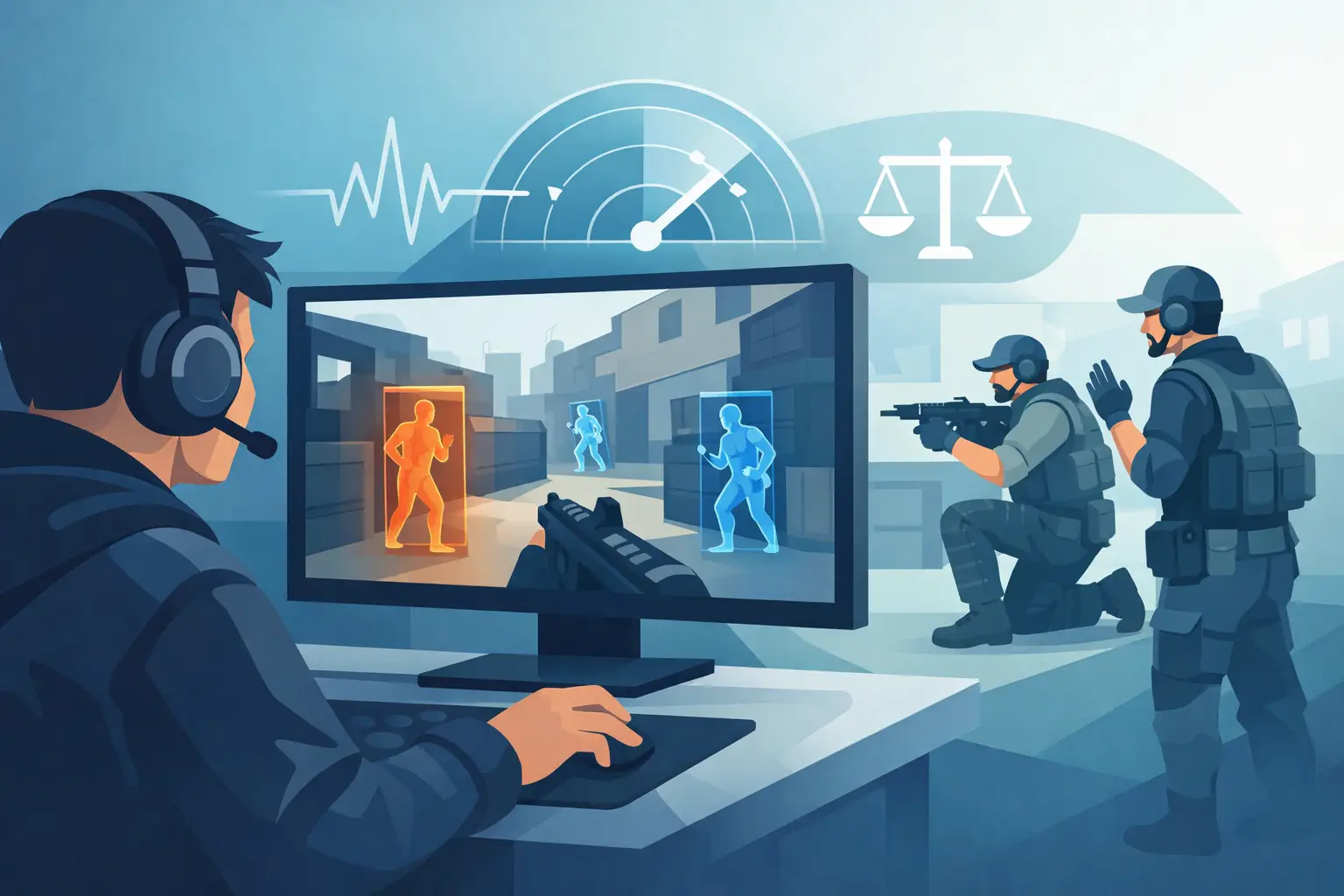
Players often reduce the decision to detection: public equals detected, private equals safe. That is the wrong frame. Online games are governed by terms of service, code-of-conduct rules, and publisher enforcement policies. A publisher does not need to explain every detection method or disclose every enforcement trigger before taking action.
Cheating also creates evidence beyond software. Impossible progression, repeated reports, abnormal match behavior, manipulated economies, and harassment can all bring scrutiny. Features designed to disrupt other players are especially likely to generate reports and damage a community quickly.
For competitive games, the result is straightforward. You may gain a short-term advantage, but you create a long-term liability. A ban is not bad luck when the activity itself violates the rules you accepted to play.
Consider the Player on the Other Side
The public-versus-private argument often ignores the cost to everyone else in the lobby. Altered money systems can damage an in-game economy. Automated aiming and information advantages can destroy a competitive match. Teleporting, forced effects, or griefing can turn a casual session into an experience people simply quit.
That has a wider effect than one match. Players leave. Moderation workload rises. Publishers tighten restrictions. Legitimate modding communities get blamed for behavior they did not create. The more disruptive the cheat, the less defensible the choice becomes.
If the appeal is experimentation, there are better options. Use official accessibility settings, custom matches where every participant agrees, developer-supported mod tools, or single-player games with established mod communities. Those routes let you change the experience without turning another player’s time into collateral damage.
A Better Standard for Game Modifications
Not all game modification is the same. A cosmetic replacement in an offline title is different from software that manipulates a live multiplayer environment. Context matters: the game’s rules, whether other people are affected, whether the publisher permits mods, and whether the content is downloaded from a reputable source.
For single-player experimentation, keep your system protected. Use unique passwords, maintain backups, scan downloads, and avoid tools that demand unnecessary privileges. Read the game’s policies before carrying any modification into a connected mode. If there is uncertainty, keep it offline.
For multiplayer, the cleanest answer is to play within the rules. Improve settings, practice specific mechanics, use training modes, learn map knowledge, or find a group that shares your skill level. Those gains remain yours after every patch, and they do not put your account or PC at risk.
The Real Choice Is Not Private or Public
Private distribution can reduce visibility. Public distribution can increase chaos. Neither category changes the central issue: untrusted software and rule-breaking online behavior carry consequences that a sales page cannot cancel.
Before you install anything, decide what your account, device, and time are worth. A short-lived advantage is a weak return if it costs you access, privacy, or the games you actually enjoy. Keep online play fair, keep experimental mods where they belong, and protect the account you spent years building.