Miss a few shots in a sweaty lobby and people start throwing the word around fast. So what is an aimbot, really? At the simplest level, it is a cheat that assists or automates aiming in a shooter by locking onto targets, correcting crosshair movement, or firing with machine-level precision. But that basic definition barely covers what matters to actual users. The real difference is in how the tool tracks targets, how natural it looks, and whether it stays undetected.
What is an aimbot?
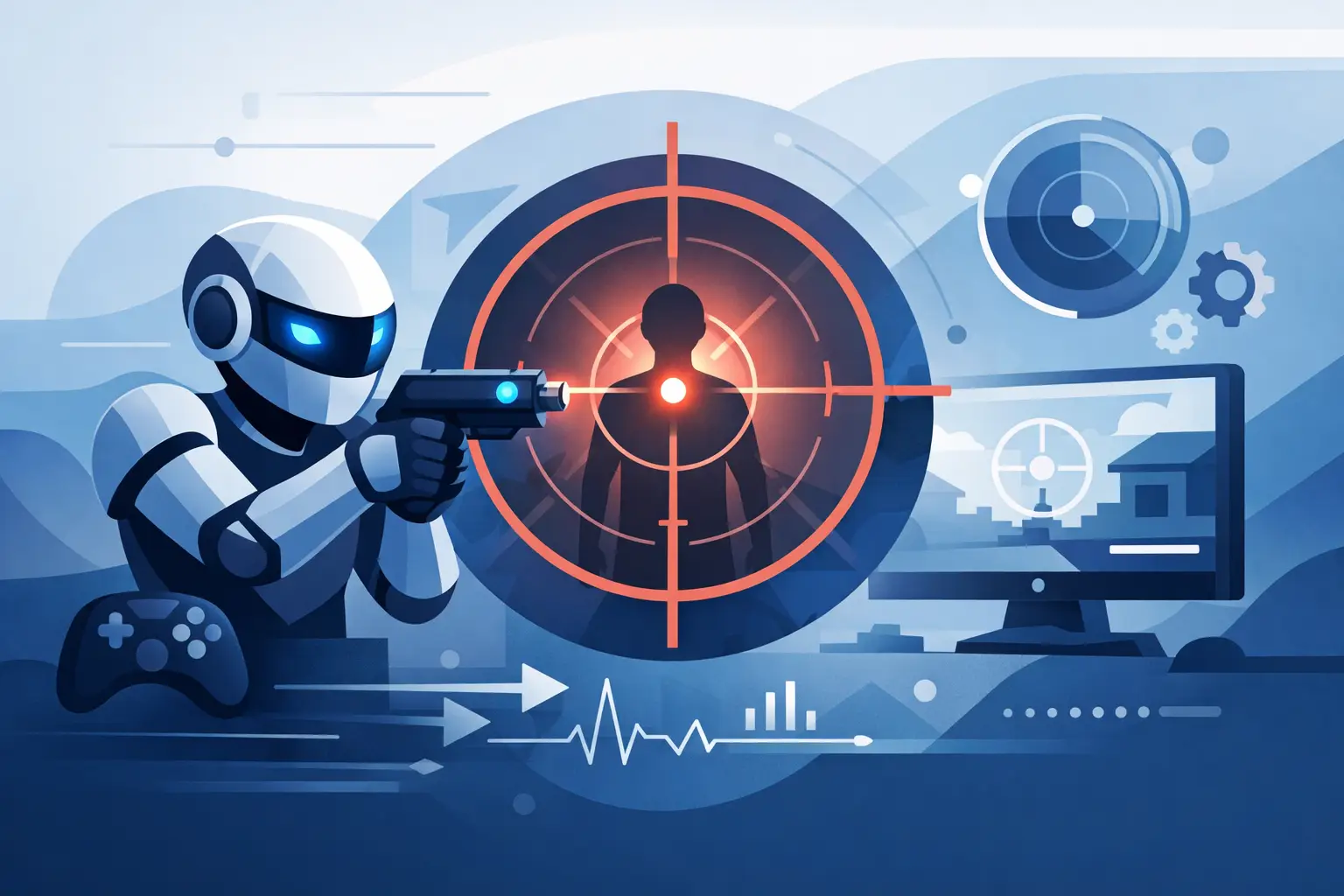
An aimbot is software that manipulates aim input in a game so the player can hit targets more easily or more consistently than normal. Depending on the build, it can snap directly to an enemy, smooth the crosshair onto a target, stick to bones like head or chest, or only activate while a hotkey is pressed.
That means not every aimbot behaves the same way. Some are blatant and built for maximum aggression. Others are tuned for stealth, where the goal is to look human enough to avoid reports while still winning more gunfights. For most players looking at premium tools, that second category is what matters.
How an aimbot works in practice
At a technical level, an aimbot reads game data and uses it to identify valid targets. That usually includes enemy position, distance, visibility, team checks, and bone locations. Once the cheat knows where the target is, it adjusts aim toward that point based on the settings chosen by the user.
The simplest version is hard lock. The moment a target enters the field of view, the crosshair snaps directly onto them. It works, but it is also the fastest way to look obvious. A better setup usually uses smoothing, FOV limits, visibility checks, and target priority. Those features reduce robotic movement and give the user more control.
Some tools also account for weapon behavior. In games with bullet travel, recoil, sway, or spread, the aimbot may compensate for those variables. In hitscan-heavy shooters, the logic is simpler because the shot lands where the aim lands. In either case, the point is the same: remove mechanical inconsistency and turn fights into controlled outcomes.
The main types of aimbot features
Not all aim assist cheats are full auto-lock systems. Premium builds usually let you choose how aggressive or subtle you want the tool to be.
A silent aim setup changes where bullets register without always dragging the visible crosshair in an obvious way. That can look cleaner from the user side, but it depends heavily on the game and server-side checks. A triggerbot is narrower. It fires automatically when the crosshair passes over a valid target. That is useful for players who want to preserve manual aiming but speed up reaction time.
Then there is smoothing, which slows aim correction to imitate hand movement. Bone selection matters too. Headshots are strong, but chest targeting can look less suspicious and still dominate. FOV settings control how far from the crosshair the aimbot will search for enemies. Lower FOV usually means safer behavior. Higher FOV means more aggressive snaps and faster kills, with a higher risk of being noticed.
Good software also includes target filtering. Team check, knocked-player ignore, visibility check, and distance limits are not extras. They are what separate a usable tool from a messy one.
Why players use aimbots
The obvious answer is to win fights. But that is only part of it. Some players want a pure edge in ranked or public lobbies. Others are tired of grind-heavy progression and want every match to feel efficient. Some use an aimbot as part of a larger package with ESP, recoil control, unlock tools, or full trainer functions.
Convenience is a major factor too. A lot of buyers are not looking to tweak raw scripts or patch broken public cheats every week. They want something stable, updated, and easy to inject through a custom loader. Download, inject, play. That is the standard now.
There is also a quality gap in the market. Public cheats are often detected faster, packed with unstable features, or abandoned the moment anti-cheat updates hit. Private and maintained tools cost more for a reason. Reliability matters when bans are on the line.
What separates a good aimbot from a bad one
A bad aimbot gets kills. A good aimbot gets kills without making the user look like a machine.
The biggest difference is control. If the software only offers raw snap and no tuning, it is a liability. A proper build gives the user options for aim key, FOV, smoothing, bone choice, target switching, and visibility checks. It should feel adjustable, not forced.
Performance matters too. Aim logic has to be responsive without causing stutter, crashes, or weird behavior during fights. If the menu is bloated or the injection method is unreliable, the whole tool becomes harder to trust. That is why premium users usually care about the loader and maintenance cycle as much as the feature list.
Stealth is the other half of the equation. A strong aimbot is not just accurate. It is designed around anti-cheat pressure and player reports. That means cleaner memory handling, consistent updates, and settings that help the user avoid obvious patterns. Undetected status is never something to treat casually.
Is using an aimbot always obvious?
No. That depends on the settings, the game, and the user.
Blatant play is obvious. Instant snaps, impossible tracking, nonstop headshots, and zero hesitation will get attention fast. But a low-FOV aimbot with mild smoothing, realistic target selection, and trigger discipline can blend in far better. That is why experienced users do not just ask whether a tool has aimbot. They ask how configurable it is.
Spectator systems and killcams also matter. A setup that feels fine in first person may look much worse when replayed from another angle. Some games are more forgiving than others, and some anti-cheat systems rely more on behavior flags than memory detection. That is where the phrase it depends actually matters. The same settings are not safe across every title.
Risks that come with aimbots
The first risk is detection. If anti-cheat flags the cheat, the account can be suspended or banned. In some games, bans can chain into hardware or linked-account penalties. Public cheats carry the highest risk because too many users are running the same build with the same signatures.
The second risk is user error. Even a well-maintained tool can look obvious if the settings are reckless. Max FOV, instant snap, head-only targeting, and nonstop rage play are a bad mix if the goal is longevity.
The third risk is bad software. Poor loaders, pasted menus, unstable offsets, and fake “undetected” claims are common in the cheat market. That is why serious buyers usually avoid random downloads and stick with maintained providers. A clean interface means nothing if the backend is sloppy.
What games use aimbots most often?
Aimbots show up anywhere gunplay matters, but they are most common in competitive shooters and open multiplayer sandboxes with firearms. First-person shooters are the obvious home because crosshair control decides fights quickly. Battle royales, extraction shooters, and arena shooters all attract aim tools for the same reason.
They also appear in some third-person titles where lock precision changes the pace of combat. Even in mixed-feature cheat menus for games like Forza Horizon 6, the interest is the same across categories: players want direct control, faster results, and tools that actually work under pressure.
So, what is an aimbot really?
It is not just auto-aim. It is a precision cheat built to remove one of the biggest skill barriers in shooters. The difference between junk software and premium software comes down to stealth, tuning, and maintenance. If the tool is outdated, obvious, or unstable, it is a problem. If it is configurable, tested, and paired with a reliable loader, it becomes a serious performance advantage.
That is the real lens to use when evaluating any aimbot. Not whether it can hit shots. Most can. The better question is whether it can do it cleanly, consistently, and without turning every match into a detection gamble. If you care about staying in control, that is where the decision starts.