A menu can work perfectly for one session and still become a problem later. That is the reality behind the question, can mod menus get detected. Detection is not always immediate, visible, or tied to one obvious action. A game may flag activity in real time, collect evidence for later review, or change its protection after an update.
If you care about account security, the right question is not whether a menu has flashy features. Ask whether it is actively maintained, whether its status is current, and whether you understand the difference between a claim of “undetected” and a permanent guarantee. Those are not the same thing.
Can Mod Menus Get Detected? Yes, Status Can Change
Yes. Any mod menu used in an online game can be detected. No provider can honestly promise permanent immunity from detection because anti-cheat systems, game builds, server checks, and enforcement methods change.
“Undetected” is a status, not a lifetime warranty. It means a tool is currently believed to be operating without known detection under its supported conditions. That status can change after a game update, an anti-cheat update, a backend adjustment, or a manual enforcement wave.
This is especially relevant in live-service games. Developers do not need to expose every detection method or act on every flag the moment it appears. They can update quietly, gather data, and take action later. A player who assumes that a clean session means zero risk is making the wrong calculation.
The practical takeaway is simple: never treat any online modification as consequence-free. Treat it as software with a changing risk profile.
What Anti-Cheat Systems May Look For
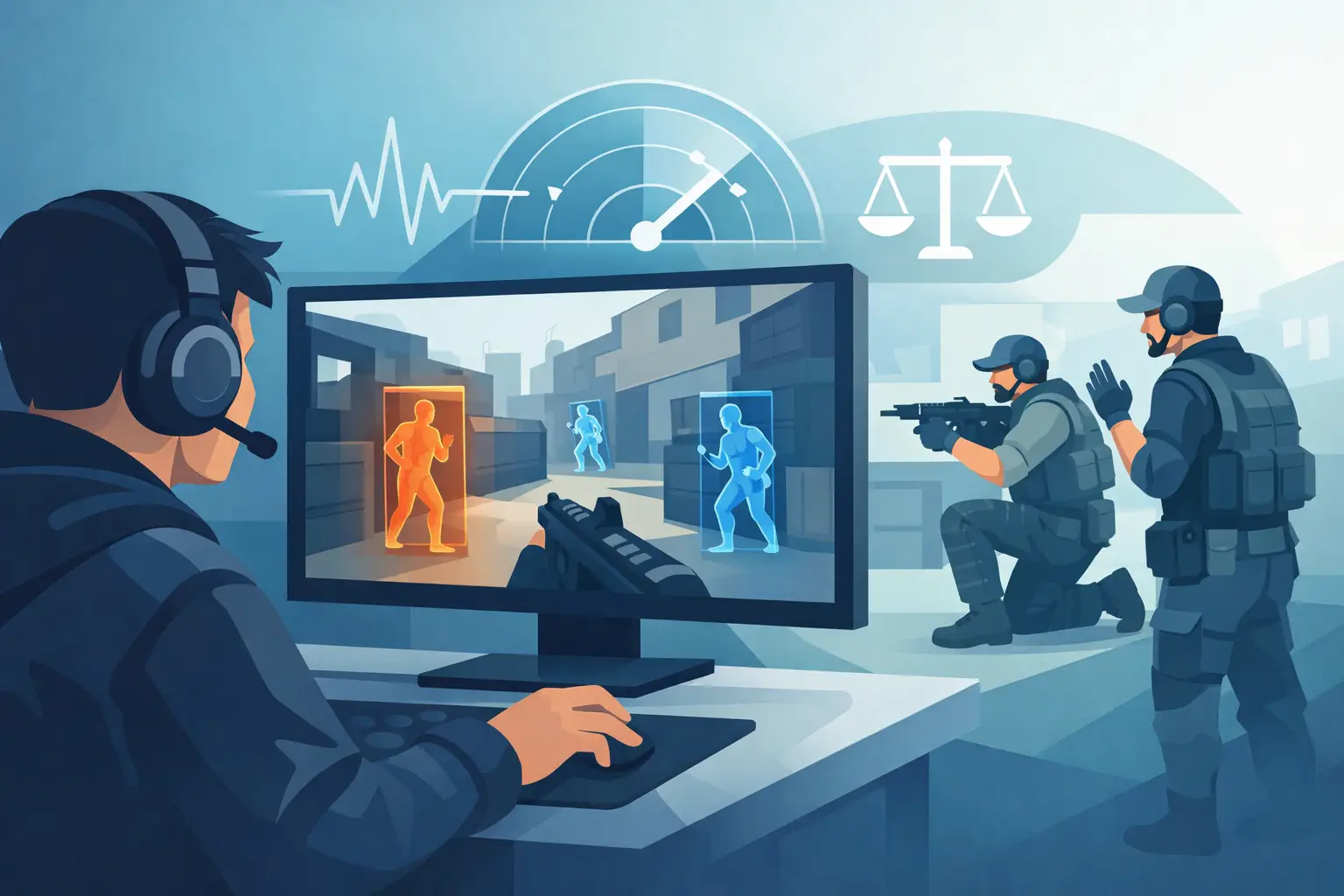
Anti-cheat is not one single check. Modern game protection can combine several signals, with different systems focused on different parts of the experience.
A client-side system may inspect the game environment for unauthorized changes, suspicious processes, altered memory behavior, or unusual game files. Server-side controls can compare what a player does against what the game should allow. If an account gains impossible inventory, moves in ways the server does not accept, or creates outcomes that do not match normal game rules, that activity can be reviewed or rejected.
Behavior also matters. An account that repeatedly produces impossible results can attract attention even if a tool itself is not directly identified. That does not mean every unusual action causes a ban. It means the visible outcome can matter as much as the method behind it.
Manual reports are another factor. Reports do not automatically prove anything, but they can increase scrutiny when they line up with suspicious gameplay data. Public disruption, obvious griefing, and extreme in-game actions create more exposure than controlled, low-profile use. The tool is one part of the risk. The way it is used is another.
Why Detection Risk Changes Fast
Game security is an active contest. A menu that was stable last week may need changes after a patch, and a menu that supports one game build may not support the next one. This is why old downloads, leaked builds, and abandoned public tools are a bad bet.
Free or public menus carry a different kind of pressure. Once a tool is widely distributed, it is easier for developers and anti-cheat teams to obtain, analyze, and target. Large user counts can also create a recognizable pattern of activity. Cheap access is not the same as low risk.
Maintenance is the real product behind a paid menu. The loader, supported game version, feature set, and detection status all need active attention. A provider that does not clearly communicate downtime or updates is asking users to guess at the most important part.
For popular titles, that pressure is higher. Games with large player populations, competitive modes, and active developer support often receive more frequent patches and more scrutiny. If a game is trending hard, expect its protection and enforcement environment to move faster too.
“Undetected” Should Mean Current, Not Magical
The word undetected gets abused in this market. Some sellers use it as a permanent marketing label even when a product has not been updated in months. That is not confidence. That is noise.
A meaningful undetected claim should be tied to the current supported version of the game and backed by active maintenance. If a tool is temporarily unavailable after an update, that can be a better sign than pretending nothing changed. Taking a product offline while compatibility is checked is more responsible than leaving users exposed to an unknown state.
Users should also understand that detection status is not a guarantee of account protection. A provider can test a product, maintain its loader, and respond to updates quickly. None of that removes the possibility of bans, resets, suspensions, or other action by the game publisher.
That distinction matters because the risk belongs to the account owner. If an account holds purchased content, competitive progress, rare unlocks, or years of history, the cost of enforcement may be far greater than the price of a menu.
The Biggest Red Flags Before You Use a Menu
Detection is not the only danger. Bad tools can create stability and security problems before anti-cheat ever enters the picture. Be skeptical when a menu has no clear supported game version, no visible update communication, no feature documentation, or no explanation of what happens after a major patch.
A few warning signs deserve immediate attention:
- A seller claims permanent, guaranteed safety in every mode and every update.
- The download is reposted through random file hosts, chat channels, or copied storefronts.
- The tool demands broad system changes with no clear reason or documentation.
- The product has not been updated while the game has received multiple patches.
- The feature list promises extreme outcomes without explaining supported modes or limitations.
These are not minor presentation issues. They point to a product that may be outdated, poorly controlled, or designed around a quick sale rather than continued support.
A legitimate operation should be clear about what is supported now, what is under maintenance, and what is temporarily unavailable. Fast access is useful. Blind access is not.
Multiplayer Carries More Consequences Than Solo Play
The risk profile is not identical across every game mode. Offline and single-player modifications can still create crashes, corrupted saves, or account-related issues in games that synchronize progression. But multiplayer use adds server validation, other players, reports, and competitive integrity enforcement to the equation.
The more a feature affects another player’s experience or alters a shared economy, the more likely it is to draw attention. Competitive shooters, ranked modes, persistent online worlds, and games with valuable progression systems are usually less forgiving than isolated sandbox sessions.
That is why responsible users separate curiosity from account value. If the account matters, do not let a moment of convenience become a permanent loss. Read the game’s rules, understand the enforcement risk, and accept that the publisher controls the platform.
How to Judge a Menu Provider Without Guesswork
Look beyond screenshots and oversized feature lists. A serious provider should show signs of active operations: current compatibility information, visible status updates, clear support boundaries, and a product that is removed or paused when its state cannot be confirmed.
The best signal is consistency. Does the provider maintain the same product after game patches? Are changes communicated directly? Is the loader designed around a straightforward experience rather than a confusing collection of third-party steps? Those details do not make a menu risk-free, but they separate maintained software from abandoned files.
DarkOffset focuses on the part that matters most: maintained access, current status, and a direct loader-based workflow. That is the standard users should expect from any premium menu provider, not a bonus feature.
Make the Account Decision Before the Download
A mod menu is never just a feature purchase. It is an account-risk decision. The more valuable the account, the more carefully that decision should be made.
Do not chase an old “undetected” claim after a patch. Do not assume a popular menu is automatically safe. And do not confuse a tool loading successfully with the absence of enforcement risk. Check current status, respect downtime, and choose providers that treat maintenance as part of the product.
The strongest move is not pretending detection does not exist. It is knowing the risk, refusing bad tools, and deciding whether the account is worth putting on the line.