Most players do not need more buttons. They need the right ones. The best mod menu features are the ones that give immediate control, stay usable after updates, and do not waste time with gimmicks that look good on a sales page but fall apart in-game.
That is the real split in this market. One menu gives you ten flashy tabs and half the options crash a lobby. Another gives you a tighter set of tools, cleaner injection, and functions that actually hold up under pressure. If you care about performance, stealth, and speed, feature quality matters more than raw feature count.
What separates the best mod menu features from filler
A strong mod menu is not judged by how long the list is. It is judged by whether the features are stable, responsive, and useful in the game you are actually playing. God mode means something in a PvE sandbox. In a competitive shooter, ESP and aimbot quality carry more weight. In an open-world title, teleport, vehicle spawn, and money editing often matter more than anything else.
There is also the issue of risk. A feature can be powerful and still not be worth using online if it is sloppy or too obvious. The best mod menu features balance impact with control. They let you scale aggression up or down instead of forcing one reckless setting that gets you flagged or reported immediately.
ESP is still one of the best mod menu features
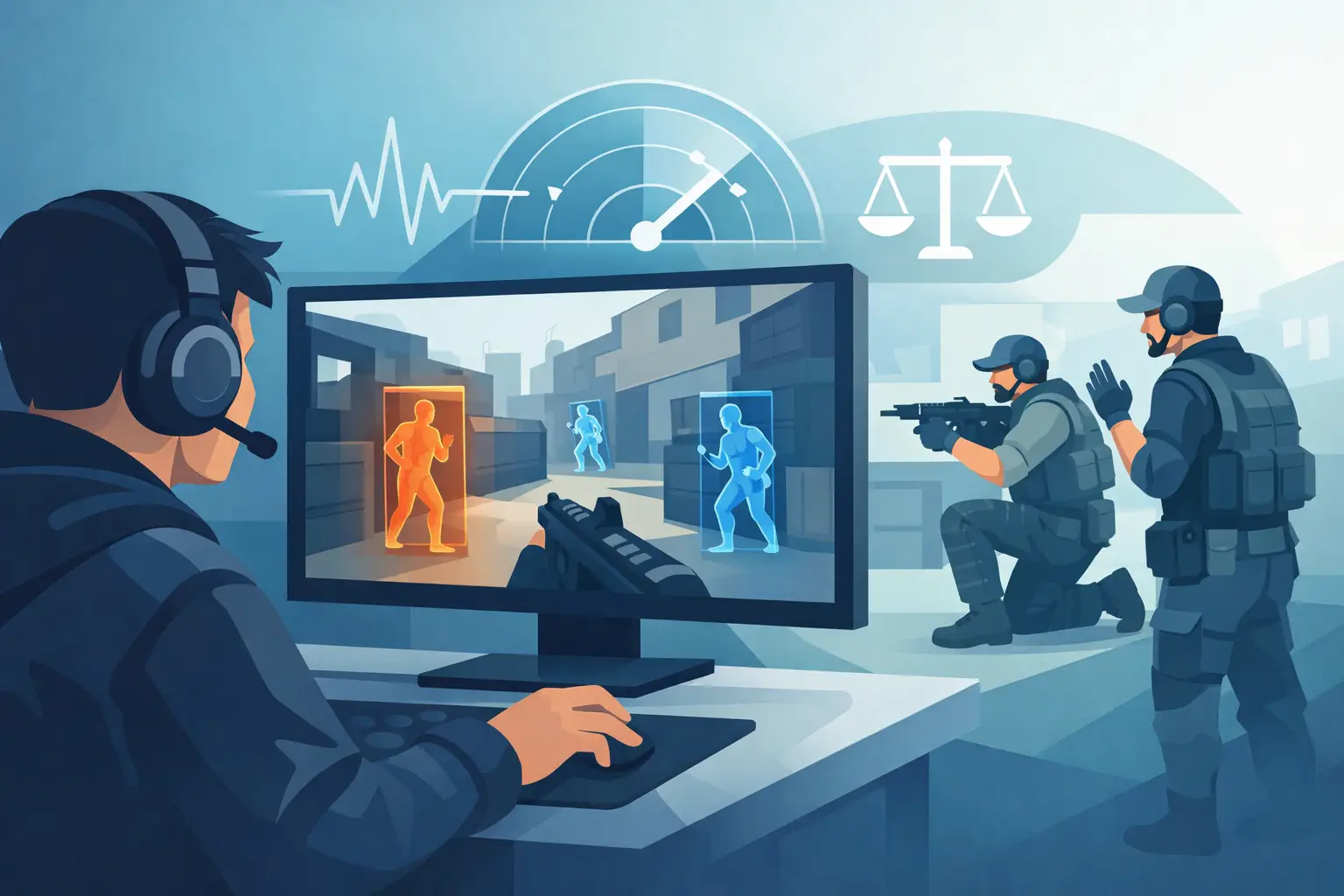
ESP stays near the top because information wins games. A good ESP system tells you where players, NPCs, vehicles, loot, or objectives are before they become a problem. That changes every decision you make, from route planning to target selection.
But not all ESP is equal. Clean overlays matter. If the screen turns into a mess of boxes, names, and colors, it becomes noise. The better setup is selective. Player ESP, distance, health, weapon info, and line-of-sight indicators are usually enough. In some games, item ESP matters more than player tracking. In others, vehicle ESP is the real advantage.
The trade-off is visibility. Heavy ESP use can be subtle on your screen, but the plays it enables can look unnatural if you start pre-aiming every corner with perfect timing. Good users know when to pull back.
Aimbot only matters if the settings are precise
Aimbot sells menus, but bad aimbot ruins them. The difference comes down to control. Strong aimbot features let you adjust FOV, smoothing, target bone, visibility checks, recoil behavior, and aim keys. Without those settings, the tool goes from useful to obvious fast.
For aggressive players, hard lock can end fights instantly. For anyone trying to stay under the radar, softer aim assist with controlled smoothing is usually the better play. It looks more human, especially in multiplayer environments where every snap gets noticed.
This is where quality beats hype. A menu that gives you deep aimbot tuning is worth more than one that just says aimbot included. Precision settings are what make it usable.
God mode, health edits, and defense tools
Some features are pure control. God mode, infinite health, armor refills, stamina edits, and damage reduction turn survival into a non-issue. In single-player and co-op, that can save time and remove grind instantly. In hostile public sessions, defensive functions can keep you moving when everyone else is getting farmed.
The best version of these features is not always full invincibility. Sometimes partial control is smarter. Adjustable health, armor boosts, or temporary protection can keep the experience usable without making your gameplay look ridiculous. Total immunity has value, but it also attracts attention when overused.
Defense tools also go beyond health. Anti-kick, anti-freeze, anti-spectate, and session protection features matter because a menu is not just about offense. It is about staying in the game on your terms.
Money, XP, and unlock systems save the most time
For a lot of players, progression control is the whole point. Grinding levels, cash, and gear for dozens of hours is dead time. That is why money editing, XP multipliers, stat editors, and unlock-all systems remain some of the best mod menu features across almost every genre.
These tools are valuable because they compress the boring parts. You skip repetitive farming and move straight to the content you actually want - better vehicles, weapons, cosmetics, characters, or late-game areas. In games built around long progression loops, that is not a small benefit. It is the main one.
Still, this category is where people get careless. Huge cash spikes, impossible level jumps, or instant full account completion can look reckless depending on the game and its backend checks. Controlled use is usually the smarter route. Fast is good. Obvious is not.
Teleport, noclip, and movement control
Movement features are underrated until you use a good one. Teleport, waypoint teleport, noclip, speed modification, and freecam give you map control that normal players do not have. In large open-world games, that means faster farming, cleaner escapes, and less time wasted on travel.
These features also change how you approach events and resource routes. You can reposition for objectives, avoid chokepoints, or move to hidden areas without the usual delay. In a title like Forza Horizon 6, for example, movement-based tools can matter just as much as currency or vehicle functions because pacing is everything.
The catch is stability. Sloppy teleport systems can desync, bug missions, or create obvious movement patterns. The best ones are fast, accurate, and easy to chain without breaking the session.
Item and vehicle spawning are high-value features
Spawn systems are simple on paper and powerful in practice. Being able to generate weapons, items, vehicles, or resources on demand removes the usual gatekeeping. If the game locks content behind time, rank, or luck, spawning cuts straight through it.
This feature becomes even better when paired with ownership options, upgrade controls, and cleanup tools. Spawning a vehicle is one thing. Spawning the right vehicle, fully tuned, in the right location, and removing it cleanly after use is what separates a polished menu from a basic one.
Again, context matters. In some games, item spawning is a core feature. In others, it is mostly a side utility. The value depends on what the title restricts and how much the menu lets you customize the result.
Griefing and trolling tools are only good if they are stable
A lot of menus advertise griefing functions because they are easy to sell. Explosion loops, force events, ragdoll triggers, remote disruptions, and session harassment options all sound strong. Sometimes they are. Sometimes they are just noisy features that crash more often than they hit.
If you use this category, stability matters more than raw aggression. A controlled griefing tool with targeting options, cooldown logic, and protection bypass is more useful than ten broken options stacked in a tab. It also helps to have fast toggles. When a lobby shifts, you need to adapt immediately, not dig through menus.
This is also the clearest case of it depends. Some players want pressure tools for retaliation. Others do not want the attention that comes with them. The best menu gives the option without forcing the style.
The loader and UI matter more than most users admit
A feature set can look perfect and still fail if the loader is messy or the interface wastes time. Fast injection, clean updates, reliable launch flow, and a UI that makes sense are part of the product. They are not extras.
This matters even more for less technical users. If setup turns into a chore, the menu loses value immediately. A strong custom loader reduces friction, keeps the process simple, and helps maintain consistency across updates. DarkOffset leans hard into that because convenience and stealth are not separate from performance. They are part of it.
Inside the menu, layout matters too. You want quick access to core functions, smart grouping, searchable options if the feature set is large, and settings that save properly. The best mod menu features are only useful if you can reach them fast when it counts.
The feature that matters most is reliability
Players love to argue about whether ESP beats aimbot or whether teleport is more useful than unlock-all. The real answer depends on the game. What does not change is this: the best feature on paper is worthless if it is detected, broken after patches, or unstable in live sessions.
That is why the strongest menus are not just feature-rich. They are maintained. They get updated fast. Their functions work the way they are supposed to work, when you need them. Everything else is sales copy.
If you are choosing a menu, think less about the biggest list and more about the features you will actually use every session. Pick the tools that save time, give control, and stay reliable after the first week. That is where the real value is.